On-the-Job Training Strategies for HR Professionals
HR is one of those areas where theory can only take you so far. You can learn about policy, frameworks and best practice, but working with people, messy emotions and situations is where true learning takes place. That’s usually when most people can start to feel the difference between what they thought the job was going to be like and what it actually is.
OJT is especially effective in HR because it reflects the day-to-day demands of the role. When it works well, it doesn’t even seem like “training.” It’s just learning by doing, with someone there when you need help rather than looking over your shoulder 24/7.
Here are a few OJT strategies that tend to be especially effective in HR.
Shadowing Experienced HR Professionals
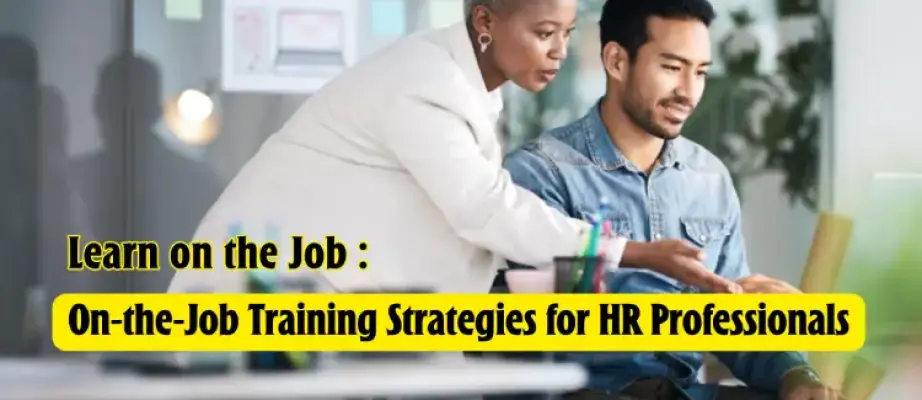
One of the fastest ways to learn HR properly is by watching someone who already knows what they’re doing. You’re not watching a perfectly staged training exercise. You’re sitting in on real conversations and seeing how decisions are made when there isn’t a neat answer.
You notice things that never show up in manuals. The pause before a response. The way someone phrases a difficult question. The moment they decide to escalate an issue, or deliberately don’t. Those details matter far more than people realise.
If you’re also studying something like a grad cert in human resource analytics, this is usually when the dots start to connect. Suddenly, data, trends and past outcomes actually have a purpose when you can see exactly why they’re being used. Instead of feeling like study and work are separate things, they start feeding into each other in a way that actually makes sense.
Learning Through Real Case Exposure
You don’t really learn HR through perfect examples. You learn it through situations that are awkward, emotionally charged or slightly uncomfortable. Sitting in on performance conversations, investigations or employee complaints teaches you more than any role play ever could.
Even when you’re not the one leading the conversation, you start picking things up. You notice how small issues turn into bigger ones if they’re ignored, where the real risks tend to sit, and how details you might’ve brushed past before suddenly matter a lot.
Over time, you stop second-guessing yourself so much. You get a feel for what needs to be dealt with straight away and what can wait. That kind of judgement doesn’t come from theory or textbooks. It’s one of those priceless things that you learn from being there, again and again.
Gradually Taking on More Responsibility
Good on-the-job training shouldn’t feel like being thrown into the deep end. If you don't have the resources to create a full training and development plan, many people grow by doing the behind-the-scenes work, things like preparing documents, organising records, coordinating training sessions or keeping systems up to date. Yes, it’s not the most glamorous work in the world, but it’s a lot more meaningful than people realise.
As you grow more comfortable and people start placing their trust in you, the work naturally shifts. You might take the lead on onboarding, handle straightforward employee issues, or run a small internal project. Every step adds a little more responsibility without overwhelming you. The steady build is incredibly important in HR, where mistakes can have very real consequences.
This gradual build is especially important in HR. Mistakes can affect real people, so learning at a steady pace helps you grow without constantly feeling on edge or second-guessing yourself. You’re not pretending to know everything. You’re learning as you go, with support.
Learning to Reflect, Not Just React
HR work can turn into constant reacting if you’re not careful. One problem falls on your desk, you solve it and — bam! — before you can even catch your breath, the next one hits. You go days at a time just putting out fires, without stopping to think about what’s actually going on.
Taking a moment to reflect on the changes doesn’t have to be formal. It could be a short debrief with someone you trust, or just taking a quiet moment to think about what worked and what didn’t. Over time, those pauses help you spot patterns and respond more calmly the next time something similar crops up.
Mentoring and Informal Support
HR can get surprisingly lonely at times. You’re often dealing with sensitive information that you can’t discuss with others, and that can make it hard to know whether you’re handling things the right way. Having someone you trust to talk things through makes a huge difference.
It doesn’t always have to be a formal mentorship arrangement. Often it’s just a more experienced colleague who’s willing to listen, share how they’ve handled similar situations, or tell you when you’re overthinking things. As time goes on, knowing that you’ve got someone to lean on makes it easier to back yourself, particularly when things feel uncomfortable or emotionally charged. Having a mentor to guide you is also known to improve employee and workplace happiness, because those conversations help you stay grounded and engaged.
Learning from Mistakes Without Fear
Mistakes are natural in HR. You’re working with human beings, complex feelings, and nuanced situations that don’t always go as planned, so things aren’t going to be perfect every time. That’s okay. What really matters is whether you’re in an environment where mistakes are treated as something to learn from, rather than something to be afraid of.
When mistakes are treated as learning opportunities instead of failures, people ask more questions and improve faster. You start to grasp what went wrong, how to manage it differently next time, and how to recover without panicking.
Over time, that builds confidence. You stop freezing up or stressing over every decision, because you know learning comes from experience, not from getting everything right the first time.
Final Thoughts
HR is one of those fields in which you gain confidence through experience rather than just a title. You can study the theory, but it’s the day-to-day situations that teach you how to listen properly, make judgement calls and deal with things when there isn’t a perfect answer.
This is why on-the-job training and development in HR works so well. You learn by watching, doing, reflecting and sometimes making mistakes that make you a better HR leader. And over time, those experiences build instincts that can’t be faked. If you want to grow in HR, learning on the job is about how you cultivate the calm, competent demeanour people count on when things get a little messy.